
Can You Die From Peptides? The Honest Safety Guide Every Researcher Should Read
The short answer is no. Peptides are short chains of amino acids — the same building blocks your body already produces naturally. When sourced correctly and handled properly, research-grade peptides have an exceptional safety profile backed by decades of preclinical and clinical data.
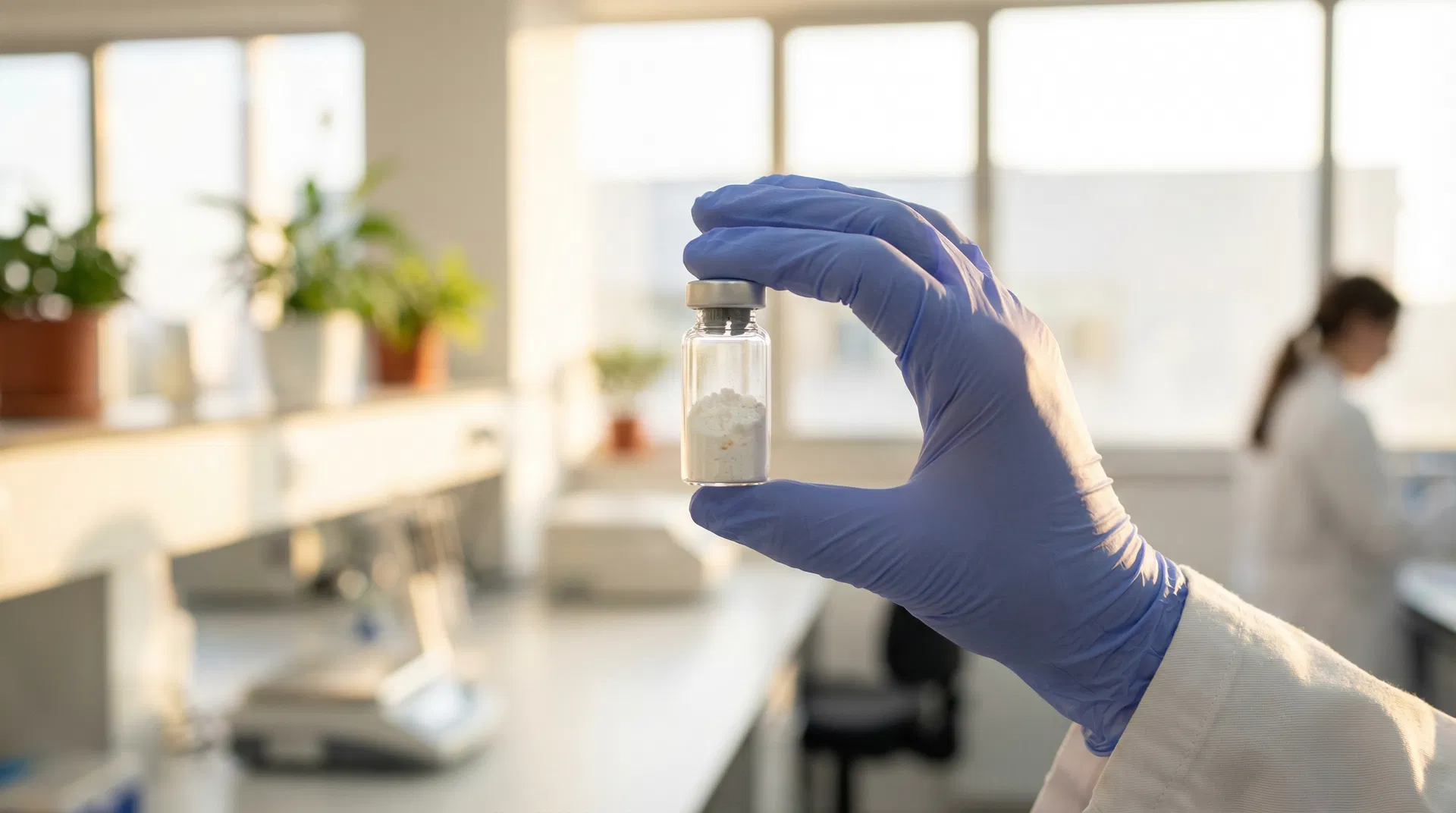
Research Use Only. This article is for informational and research purposes only and does not constitute medical advice. Always consult a qualified healthcare professional before making any health decisions.
The Short Answer: No
Peptides are among the most well-tolerated research compounds in modern biochemistry. The scientific literature spanning decades of preclinical animal studies and human clinical trials has not established a lethal dose for any of the commonly researched peptide compounds — including BPC-157, TB-500, Ipamorelin, CJC-1295, SS-31, Semaglutide, or Tirzepatide — at research-relevant concentrations.
The reason is straightforward: peptides are chains of amino acids. Amino acids are the fundamental building blocks of every protein in the human body. Your body produces, processes, and breaks down peptides constantly as part of normal metabolism. Research peptides work by mimicking or modulating naturally occurring biological signals — they are not foreign toxins, heavy metals, or synthetic chemicals with no biological analogue.
This article addresses the concern directly, explains what the real risks are (they are manageable), and gives you the information you need to approach peptide research with confidence.
What Are Peptides, Exactly?
A peptide is a molecule made of two or more amino acids linked together by peptide bonds. When a chain reaches 50 or more amino acids, it is typically classified as a protein. The peptides used in research are short — most are between 5 and 44 amino acids in length.
Your body is already full of peptides. Insulin is a peptide. Oxytocin is a peptide. The growth hormone your pituitary gland releases is regulated by peptide signals. Collagen — the most abundant protein in your body — is built from peptide chains. When you eat a steak or a piece of chicken, your digestive system breaks the proteins down into peptides and amino acids for absorption.
Research peptides are synthetic versions of these naturally occurring molecules, manufactured to high purity standards so that researchers can study their effects in controlled laboratory settings.
Why Do People Ask This Question?
The concern is understandable. Peptides are a relatively new category of research compound to reach mainstream awareness, and much of the early information circulating online was either incomplete, sensationalised, or conflated peptides with other substances that carry genuine risks.
Several factors contribute to the confusion:
Conflation with steroids and hormones. Peptides are sometimes discussed in the same communities as anabolic steroids, which do carry significant health risks at high doses. The two categories are biochemically very different. Steroids are lipid-based hormones that directly bind nuclear receptors and alter gene expression. Peptides are amino acid chains that interact with cell surface receptors and are rapidly metabolised.
Concerns about injection. Some research peptides are administered via subcutaneous injection in animal studies. The injection process itself carries risks if not performed correctly — but this is true of any injectable substance, including saline. The peptide compound itself is not the source of danger.
Impurity concerns. The genuine safety risk associated with low-quality peptide sources is not the peptide itself — it is contaminants. Bacterial endotoxins, residual solvents, or incorrect concentrations from poorly manufactured products are the real hazard. This is precisely why HPLC purity verification and Certificates of Analysis matter.
What Does the Research Actually Show?
Decades of preclinical and clinical data consistently support the safety of research peptides at appropriate concentrations.
BPC-157 has been studied in rodent models since the early 1990s. Across hundreds of published studies, no lethal dose has been established. The compound has been administered at doses many times higher than typical research concentrations without producing toxicity.
Ipamorelin, one of the most selective growth hormone secretagogues studied, was evaluated in Phase 2 clinical trials in humans. The trials reported no serious adverse events attributable to the compound. The most commonly noted effects were mild and transient.
SS-31 (Elamipretide) has been through multiple Phase 2 and Phase 3 clinical trials and received FDA approval for Barth syndrome in 2024 under the name FORZINITY™. The 168-week open-label extension of the TAZPOWER trial — over three years of continuous human use — reported no clinically significant safety signals.
Semaglutide and Tirzepatide are GLP-1 receptor agonist peptides that are now among the most prescribed medications in the world under brand names like Ozempic and Mounjaro. Their safety profiles are extensively documented across millions of patient-years of real-world use.
| Compound | Clinical Status | Safety Record | |---|---|---| | BPC-157 | Preclinical; no human trials completed | No lethal dose established in animal models | | TB-500 | Preclinical | Excellent tolerability across all published studies | | Ipamorelin | Phase 2 human trials | No serious adverse events reported | | SS-31 / Elamipretide | FDA approved (Barth syndrome) | 168-week human trial with no significant safety signals | | Semaglutide | FDA approved; millions of prescriptions | Well-characterised profile; GI effects most common | | Tirzepatide | FDA approved | Similar profile to semaglutide |
What Are the Real Risks — And How to Manage Them
Honesty matters here. While peptides themselves are not dangerous, there are real risks associated with how they are sourced and handled. Understanding these is what separates responsible research from careless use.
1. Purity and Source Quality
This is the most significant risk factor. A peptide supplied at 70% purity with unknown contaminants is not the same product as a peptide verified at ≥98% purity with a full Certificate of Analysis. Bacterial endotoxins — a common contaminant in poorly manufactured peptides — can cause serious inflammatory responses.
How to manage it: Only source from suppliers who provide HPLC chromatograms and batch-specific COAs. Pure Peptides verifies every batch at ≥99.6% HPLC purity and provides full documentation for every order.
2. Reconstitution Errors
Lyophilised peptides must be reconstituted correctly. Using the wrong solvent, incorrect volume, or contaminated bacteriostatic water can compromise the compound and introduce risk.
How to manage it: Always use sterile bacteriostatic water. Calculate your target concentration before reconstituting. Use the Pure Peptides reconstitution guides available on each product page.
3. Storage Conditions
Peptides degrade if stored incorrectly. A degraded peptide is not necessarily dangerous, but it will not behave as expected in research, and degradation products are less well-characterised.
How to manage it: Store lyophilised peptides at −20°C, protected from light. Once reconstituted, store at 4°C and use within 28 days. Avoid repeated freeze-thaw cycles.
4. Choosing the Wrong Compound for Your Research
Different peptides act through very different mechanisms. Using a compound that is not appropriate for your research model, or combining compounds without understanding their interactions, can produce confounding results and unexpected effects in animal models.
How to manage it: Research your compounds thoroughly before beginning a protocol. If you are unsure which compounds are appropriate for your research goals, use the Pure Peptides Protocol Builder — a guided quiz that matches your research objectives to the right compounds.
The Bottom Line on Peptide Safety
Peptides are short chains of amino acids — molecules your body already knows how to process. The research literature spanning decades of preclinical and clinical study consistently shows that research-grade peptides, sourced at verified purity and handled correctly, have an excellent safety profile.
The real risks in peptide research are not the compounds themselves. They are sourcing from unverified suppliers, reconstitution errors, and inadequate storage. All of these are entirely preventable with the right information and the right supplier.
If you are new to peptide research and want guidance on which compounds are appropriate for your specific research goals, the Pure Peptides Protocol Builder will walk you through a short series of questions and match you with a personalised compound recommendation.
Research Compliance Notice: All compounds supplied by Pure Peptides are for laboratory and preclinical research purposes only. They are not approved for human use and are not intended for therapeutic application. This article is for informational purposes and does not constitute medical advice.
All compounds are sold for laboratory research use only. Researchers are responsible for compliance with all applicable institutional and regulatory guidelines.