
Where to Buy Research Peptides: A Complete Guide for Laboratories
Purchasing research-grade peptides requires navigating quality standards, documentation requirements, regulatory considerations, and supplier reliability. This guide covers everything a laboratory needs to know.
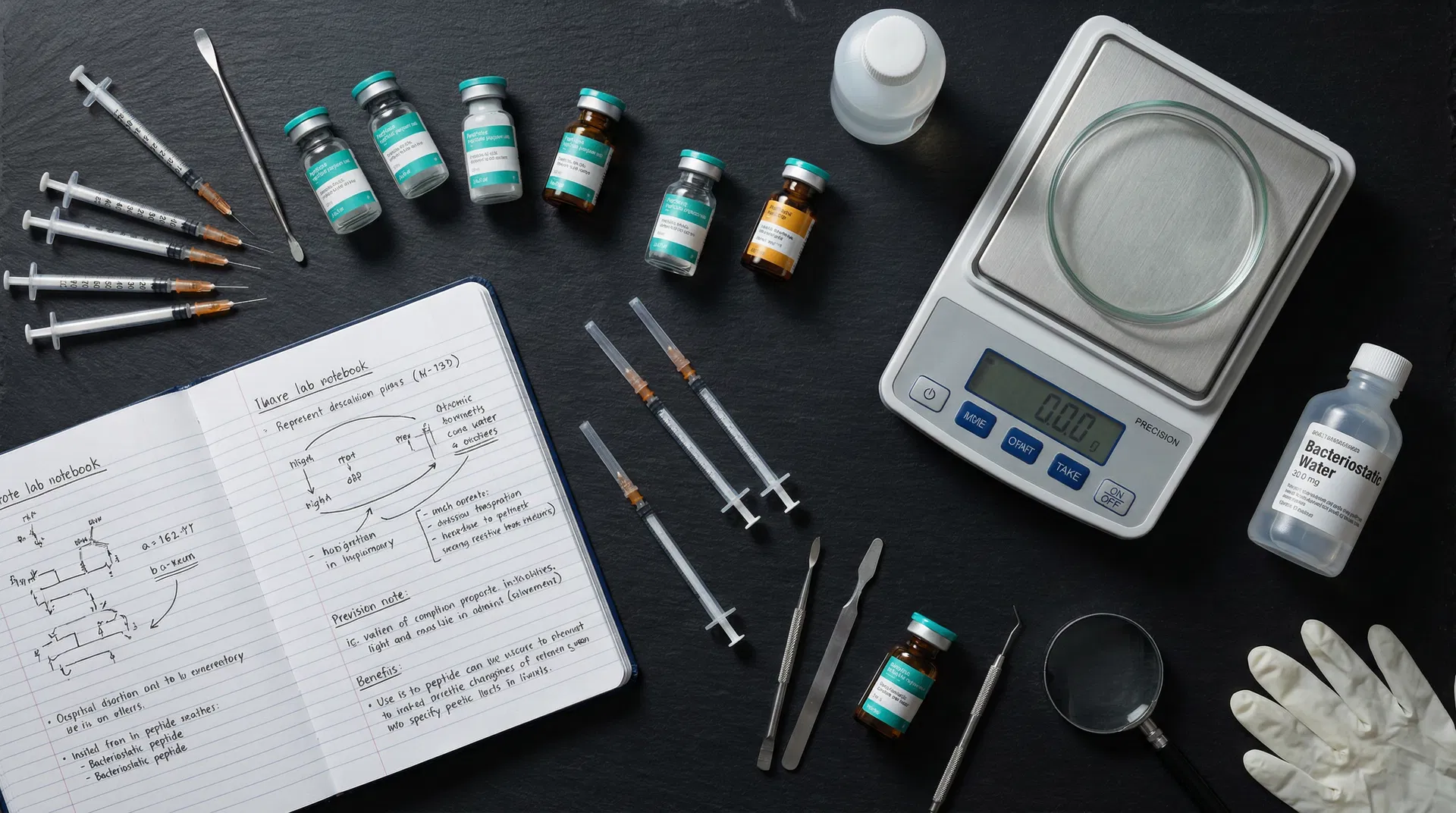
This article is for informational purposes only and does not constitute medical advice. Always consult a qualified healthcare professional before making any health decisions.
Introduction: The Research Peptide Purchasing Decision
For laboratory researchers, peptide procurement is a critical decision that directly affects experimental outcomes. Unlike commodity chemicals, research peptides vary enormously in quality between suppliers — and that variation directly impacts the reproducibility and validity of your results.
This guide is written for laboratory managers, principal investigators, and research coordinators who are responsible for peptide procurement decisions. It covers the full purchasing process from supplier evaluation through order management.
Step 1: Define Your Quality Requirements
Before evaluating suppliers, establish your minimum acceptable quality standards:
Purity threshold: What minimum HPLC purity does your research require?
- General biochemistry research: ≥98% is typically acceptable
- CNS/neurological research: ≥99% recommended
- Quantitative dose-response studies: ≥99.5%+ preferred
- Injectable animal models: ≥99% + endotoxin testing required
Documentation requirements: What COA data does your institution require?
- Some institutions require third-party independent testing
- Some require endotoxin (LAL) testing for injectable research
- Some require amino acid analysis for complex peptides
Format requirements: Lyophilized powder is the research standard for most applications. Pre-dissolved solutions are acceptable for some in vitro applications but introduce variables.
Step 2: Evaluate Supplier Credentials
Documentation Transparency
Request a sample COA before placing any order. A reputable supplier will provide batch-specific COA documentation including HPLC chromatogram and MS data without hesitation.
Compound Range
Evaluate whether the supplier carries all compounds you currently need, plus compounds you may need in future research phases. Managing fewer supplier relationships reduces administrative overhead.
Regulatory Compliance
Verify that the supplier uses compliant naming conventions (IUPAC or accepted scientific nomenclature) and includes appropriate research-use-only disclaimers. Suppliers making implied therapeutic claims in product descriptions are operating outside regulatory guidelines.
Operational Reliability
- Stock availability and backorder frequency
- Order processing and shipping timelines
- Cold-chain shipping capabilities
- Customer service responsiveness for technical questions
Step 3: Understand the Legal Framework
Research peptides occupy a specific regulatory space:
United States: Research peptides are not FDA-approved drugs. They are sold as research chemicals for laboratory use only. Purchasing for personal use, human administration, or resale for human use is not permitted.
European Union: Similar framework — research chemicals sold for laboratory research only, not for human consumption.
Australia: More restrictive — some peptides are scheduled substances. Verify current scheduling status before ordering.
Institutional requirements: Many universities and research institutions have specific procurement policies for research chemicals. Verify your institution's requirements before ordering from external suppliers.
Step 4: Ordering Best Practices
Start Small
For new suppliers, place a small initial order to verify documentation quality and compound characteristics before committing to larger quantities.
Request COA Before Payment
Reputable suppliers will provide a current batch COA before you complete your order. This allows you to verify documentation quality and confirm the batch meets your standards.
Verify on Receipt
When your order arrives:
- Check that the lot number on the product label matches the COA
- Verify the compound appears as expected (lyophilized white powder for most peptides)
- Confirm cold-chain packaging was used (cold packs or dry ice present)
- Store immediately at -20°C
Document Your Supply Chain
Maintain records of:
- Supplier name and contact information
- Order date and lot numbers
- COA documentation for each batch
- Storage conditions and dates
- Any observed quality issues
Why Pure Peptides for Laboratory Procurement
Pure Peptides was designed specifically for laboratory procurement requirements:
63+ compounds across 8 research categories — the broadest catalogue available from a single supplier at ≥99.6% purity.
Documentation package — every order includes a batch-specific COA with HPLC chromatogram, MS data, and purity percentage. Available for download before purchase.
Lyophilized format — all compounds supplied as freeze-dried powder for maximum stability and shelf life.
Cold-chain shipping — insulated packaging with cold packs standard on all orders.
Institutional ordering — volume pricing available for laboratory bulk orders. Contact us for institutional pricing.
Subscribe & Save — recurring research protocols benefit from our subscription programme: monthly (save $5/order), bi-weekly (save $10/order), or weekly (save $20/order).
Compound Categories Available
| Category | Example Compounds | |----------|------------------| | Growth Hormone Peptides | Sermorelin, Ipamorelin, CJC-1295, GHRP-6 | | Tissue Repair Peptides | BPC-157, TB-500, GHK-Cu | | Metabolic Peptides | Semaglutide, Tirzepatide, AOD-9604 | | Blend Formulations | BPC-157 + TB-500, CJC + Ipamorelin | | Mitochondrial Peptides | MOTS-c, Humanin, SS-31 | | Nootropic Peptides | Semax, Selank, Dihexa | | Immune Peptides | Thymosin Alpha-1, LL-37 | | Antioxidants | Glutathione, NAD+, Epithalon |
All compounds are sold for laboratory research use only. Not for human consumption, injection, or therapeutic application. Researchers are responsible for compliance with all applicable institutional and regulatory guidelines.